Know your structure from first pour to final inspection.
Concrete cures once, and the conditions it cures under are set for the life of the structure. Between pours, inspections and stage handovers, most of that story goes unrecorded. SapienOS keeps the measured record — for the structure, the corridor, and the file nobody else keeps.
The works move on; the record doesn't exist
Curing conditions vanish with the pour
The moment a pour is covered and the formwork moves on, the temperature and moisture that shaped its strength are gone. When the question comes later — cracking, early loading, a durability dispute — there's nothing to check.
Movement between inspections goes unwitnessed
Structures move during construction — settlement, temporary works, staged loading. Whatever happens between one inspection and the next gets reconstructed from memory and photographs, not measured.
Corridor assets run on a calendar
Culverts, retaining walls and approach slabs get inspected on a schedule, not on condition. Between visits nobody is watching the conditions those assets sit in — moisture, heat, the slow environmental load that decides how they age.
A measured record of the works
Curing baselines from the works
Temperature and moisture logged continuously at the structure itself — the conditions each pour cured in, not what the weather station up the road recorded, and drift from spec shows up while you can still act on it.
Site environment, tied to the structure
Temperature, humidity and pressure recorded against each structure and construction stage — one continuous environmental record per asset, not a spreadsheet per contractor.
A handover data pack
When the stage closes out, the measured record goes with it: timestamped measurements per structure and stage, every reading authenticated with a per-device key and signed at the gateway.
Structural monitoring
Synchronised structural monitoring — strain, vibration and modal baselining for bridges and structures — is in development: on the roadmap, not available today. Instrument the construction stage now and the platform is built to grow into it.
In developmentLive during construction, evidence at closeout
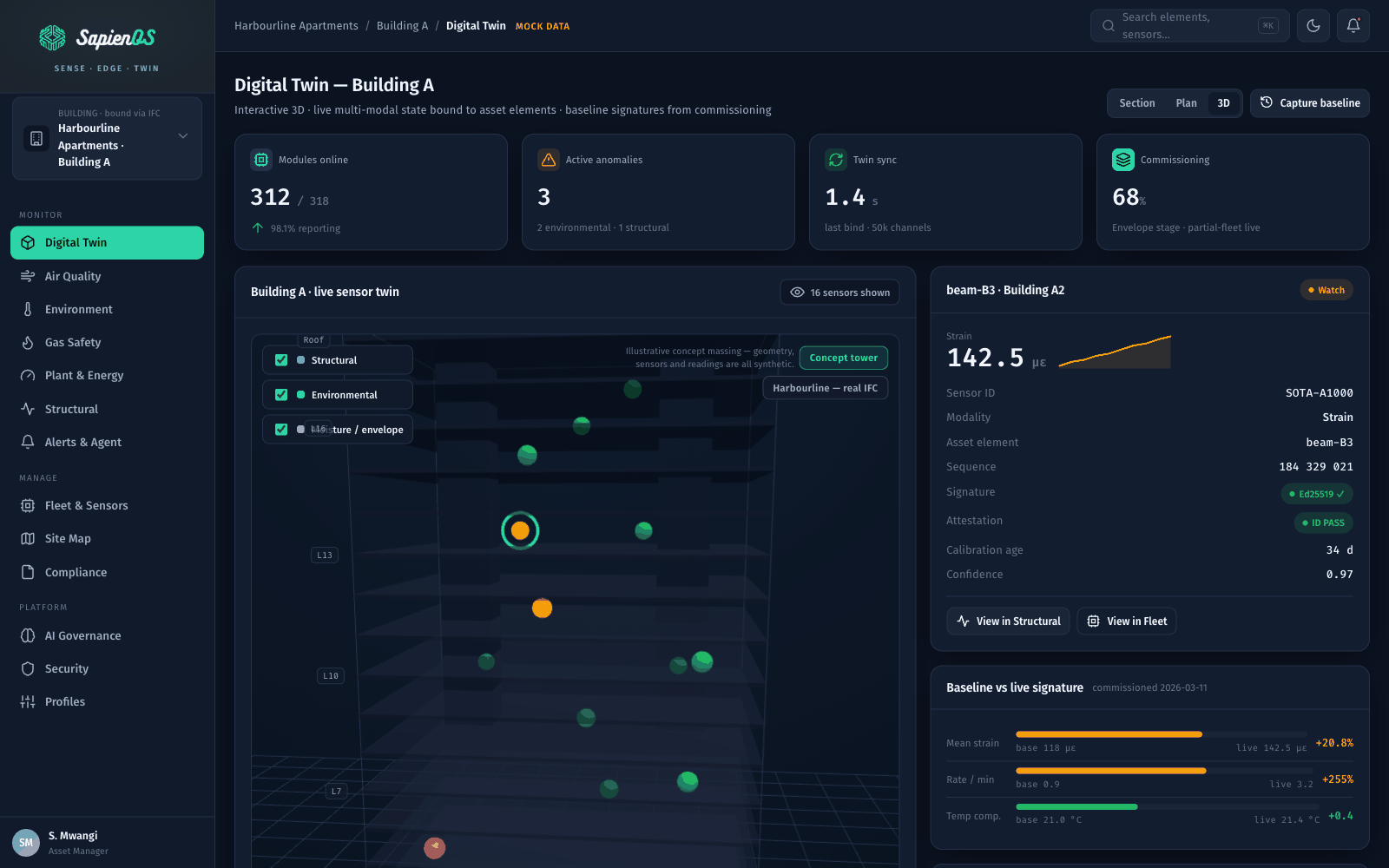
A construction-stage condition record
Every instrumented structure's measured conditions through the programme, live in one browser view — what's normal, what's drifting, and what happened while the site was quiet.
Alerts when conditions drift
When curing temperature falls out of range or a zone trends away from its baseline, the alert reaches your engineer with the location and the readings attached — so the response starts informed.
The pack that survives handover
Timestamped, authenticated measurements organised per structure and stage — the file the operator, the asset owner and a future dispute will all ask for, and the one that usually doesn't exist.
Put it on your next project
Pilot partnerships are open for civil contractors and asset owners — continuous curing and environment monitoring on real works, and a data pack that outlives the programme.